Visual Inspection
Cannot access hidden contact areas beneath supports.
Advanced ultrasonic inspection technology designed to detect and evaluate hidden corrosion beneath pipe supports, clamps and contact points — without removing the support.
Advanced phased-array ultrasonic inspection for concealed areas that are difficult or impossible to inspect visually.
Phased Array Corrosion Under Support (PA-CUS) is an advanced ultrasonic inspection technique developed to detect and assess hidden corrosion occurring beneath pipe supports, clamps, and contact points.
These areas are highly susceptible to corrosion due to moisture entrapment and coating degradation, yet remain inaccessible to visual inspection. PA-CUS enables reliable inspection without removing supports or interrupting operations.
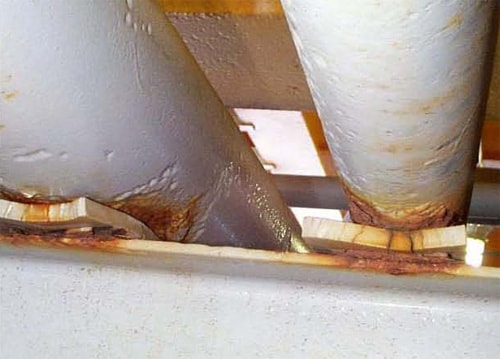
A concealed corrosion mechanism that can progress unnoticed beneath piping support structures.
Corrosion Under Support (CUS) is a localized corrosion mechanism that develops at the interface between piping and its support structures. Water ingress, trapped contaminants, and damaged coatings accelerate metal loss in these concealed areas.
Since corrosion progresses unseen, CUS can lead to unexpected wall thinning, leaks, or structural failure if it is not detected early through advanced inspection techniques.
Traditional inspection methods can have significant limitations when the affected area is concealed beneath a support.
Cannot access hidden contact areas beneath supports.
Radiation safety concerns and limited coverage can complicate inspection.
Conventional UT provides point thickness measurements rather than a broader scan.
Support removal can increase cost, downtime, and safety risk.
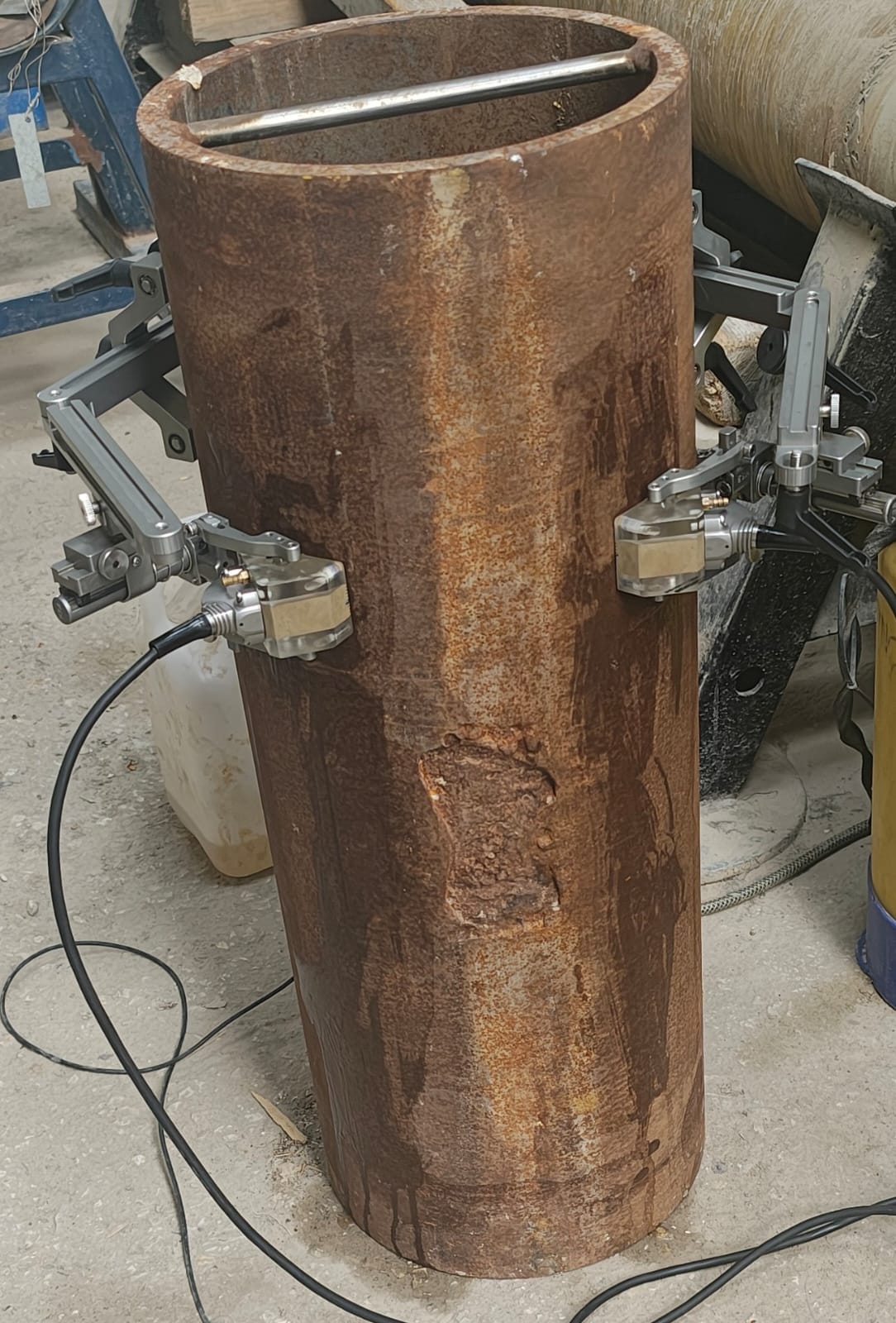
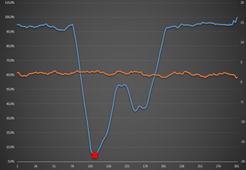
The PA-CUS technique is based on analyzing ultrasonic signal attenuation between two phased array probes positioned on non-corroded areas of the pipe.
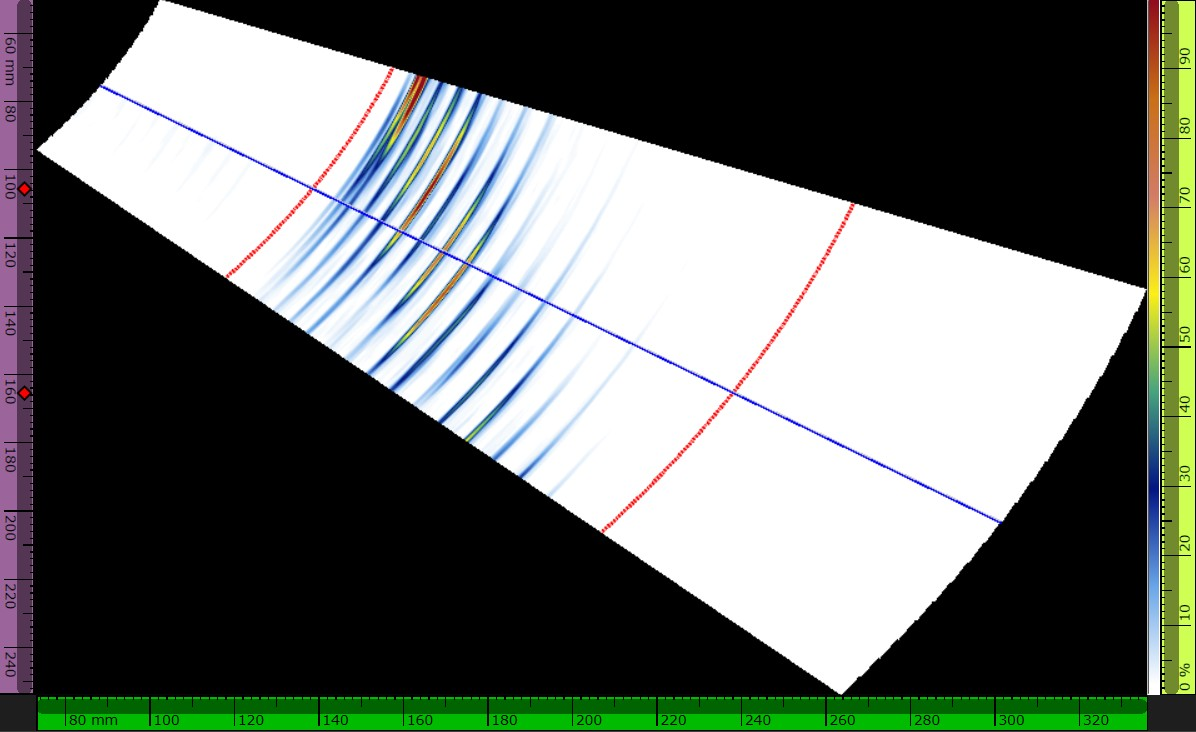
In areas without corrosion, ultrasonic reflections remain undisturbed and form a consistent vertical pattern known as the nominal signature.
Any deviation from this signature indicates the presence of corrosion or wall loss beneath the support. This approach allows detection and characterization without direct access to the affected area.
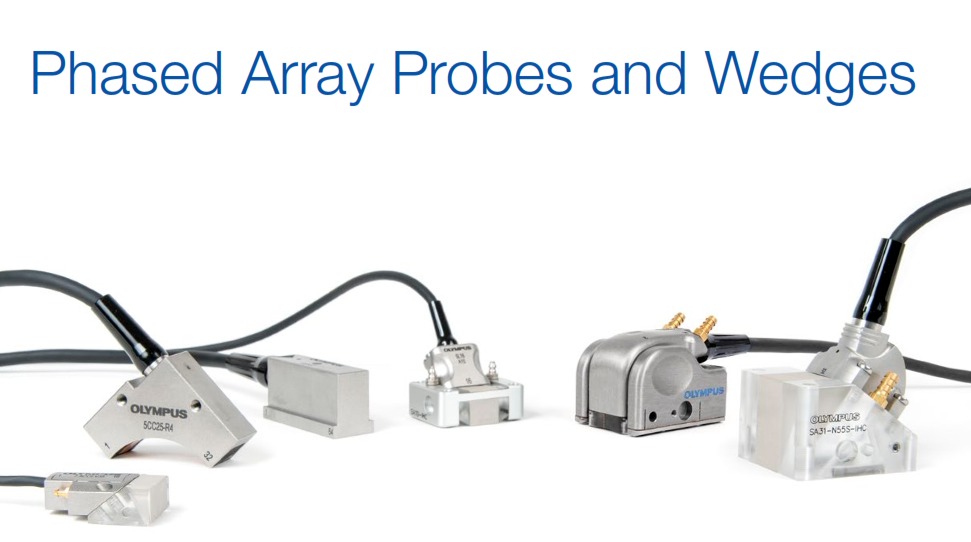
PA-CUS inspection combines phased-array ultrasonic equipment, optimized probes and repeatable encoded scanning.
PA-CUS inspection results are generated using C-scan data acquired from multiple phased array probes, along with continuous coupling monitoring.
The data is processed to generate a two-dimensional representation of corrosion depth versus scan length, providing clear visualization of corrosion severity, extent, and remaining wall thickness.
Experienced inspection professionals combining advanced and conventional NDT expertise with a strong safety and quality culture.
Advanced and conventional NDT expertise supported by forward-thinking inspection methodologies.
Strong safety and quality practices designed to deliver reliable and code-compliant inspection solutions.
PA-CUS can inspect concealed areas without requiring support removal, helping reduce operational impact.
Structured inspection data and reporting provide clear, auditable information for engineering decisions.
Discuss your inspection requirements with AITT NDT Services.